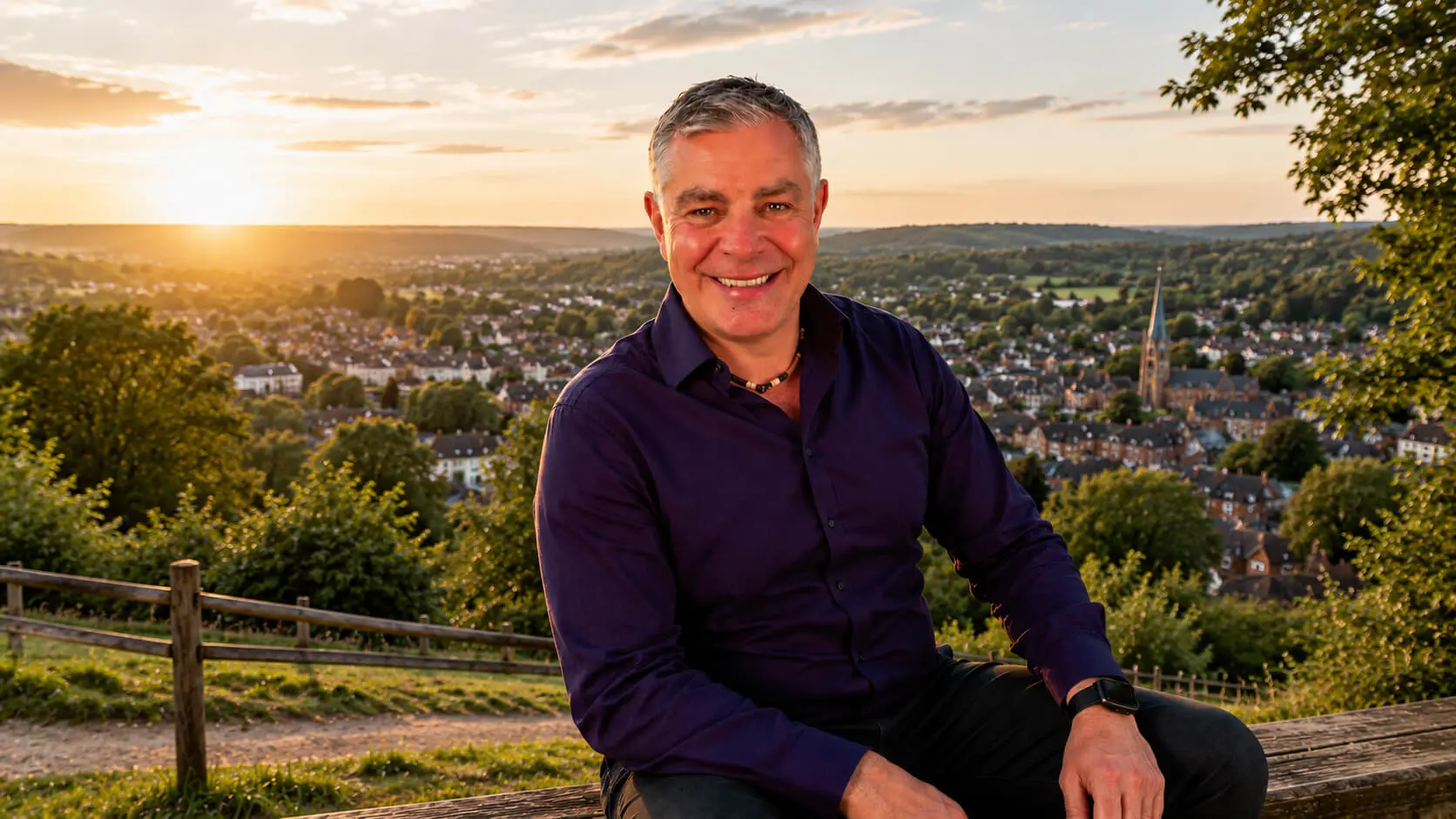
I have spent most of my adult life around health, fitness, training, nutrition and behaviour change. I started working as a personal trainer in the late 1990s, and over the years I have coached hundreds of people through different stages of life. I have seen people lose weight, get stronger, improve their fitness, change their nutrition, recover their confidence and feel better in their own body.
But the longer I have coached, and the older I have become myself, the more I have realised something important: most people are measuring their health by the wrong things.
They measure the number on the scales. They measure how they look in the mirror. They measure whether they are currently ill or not ill. They measure whether they can still “get away with it.” They measure whether they have managed to stick to a plan perfectly for a few weeks.
I understand why. I have done it myself. When you are younger, it is easy to think
health is about appearance, performance, body fat, muscle, fitness tests, or
whatever goal is right in front of you at the time.
But as I have moved through my 50s, my own view of health has changed. I still
care about being strong. I still care about training. I still care about how I eat, how I
move, how I recover, and what my body is capable of. But I no longer see those
things as short-term goals.
I see them as evidence of the kind of person I am becoming.
And that, to me, is the real measure of health. Not just what do I weigh? Not just
how do I look? Not just am I free from illness? But am I becoming the kind of
person who can carry the life I want to live?
The Question That Changes the Way We Look at Health
Clayton Christensen’s question, “How will you measure your life?” is powerful because it forces us to look at the scorecard we are using.
In work, it is easy to measure the obvious things: job title, income, recognition, status, achievement and progress. But those are not always the things that tell the full story of a life.
Health is exactly the same. Most people measure the obvious things because they
are easy to count:
• Weight
• Calories
• Steps
• Workouts completed
• Body fat
• How they look in the mirror
Some of those things matter. I am not dismissing them. But they are not the whole picture.
A person can have a reasonable number on the scales and still be weak, tired, inconsistent and disconnected from their own health. A person can be free from disease and still be losing strength, confidence, mobility and resilience. A person can look fine from the outside and still know, deep down, that they are not living in a way that supports the future they say they want.
That is why I now think the better question is this:
Am I building a body and mind that can carry the life I want?
That question has become central to how I think about my own health, and it is central to how I coach my clients.
I Used to Think Health Was Mostly About Outcomes
Like a lot of people in the fitness industry, I spent many years focused on outcomes. Lose weight. Build muscle. Get fitter. Improve body composition. Run faster. Lift more. Look better. Feel more confident.
There is nothing wrong with those goals. In fact, they can be very useful. A clear goal gives people direction. It gives them something to aim at. It can create urgency and motivation.
But over time, I started to see the limitation. The outcome was rarely the real issue. The real issue was whether the person had become the kind of person who could sustain the behaviours that created the outcome.
Someone could lose weight, but if their identity had not changed, they often returned to the same habits. Someone could complete a training plan, but if they still saw exercise as punishment, they eventually stopped. Someone could eat well for a few weeks, but if they still saw themselves as someone who “always falls off track,” that belief eventually pulled them back.
I have seen this in clients, and I have seen it in myself.
The long-term goal is not simply to get someone to follow a plan. The long-term goal is to help them become the kind of person who follows through.
That is a very different thing.
The Scale Does Not Tell You Who You Are Becoming
One of the biggest mistakes I see people make is using the scale as the main measure of their health. I understand it. It is simple. It gives you a number. It feels objective.
But the scale does not tell you enough.
It does not tell you:
• Whether you are becoming stronger
• Whether you are building muscle
• Whether you are sleeping better
• Whether you are eating more consistently
• Whether you are becoming someone who keeps promises to themselves
That last point matters more than most people realise.
When I work with clients, I am not just looking at whether they can lose a few pounds. I am looking at whether they are building evidence for a new identity.
Every time they train when they said they would, they build evidence. Every time they prepare food instead of leaving it to chance, they build evidence. Every time they go for a walk instead of waiting until they feel motivated, they build evidence. Every time they recover from a bad day without turning it into a bad week, they build evidence.
That evidence matters because identity is not built by what we say we want. It is built by what we repeatedly do.
The Real Work Is Identity
When I talk about identity in coaching, I do not mean pretending to be someone you are not. I mean helping people close the gap between the person they say they want to be and the actions they take each day.
Most people already know enough to improve their health. They know they should move more. They know they should eat better. They know they should lift weights.
They know they should sleep more. They know they should drink less, snack less, plan better, recover properly and stop relying on motivation.
The problem is not usually information. The problem is identity.
If someone sees themselves as inconsistent, they will keep finding evidence that they are inconsistent. If someone sees themselves as someone who always starts well but never finishes, they will keep repeating that pattern. If someone sees themselves as too busy, too tired, too old, too far gone, or too undisciplined, those beliefs become the lens through which they interpret every setback.
That is why I do not just want my clients to ask, “What should I do?” I want them to ask, “Who am I becoming when I do this?”
Because that is where the deeper change happens.
A workout is not just a workout. It is a vote for being someone who trains. A planned meal is not just a planned meal. It is a vote for being someone who takes care of themselves. A walk is not just a walk. It is a vote for being someone who moves daily. Starting again after a setback is not just damage control. It is a vote for being someone who does not quit when life gets imperfect.
That is the real work.
Health Is Not Just the Absence of Illness
Another wrong measure is thinking that health simply means not being ill. I hear this a lot, especially from people in midlife.
They will say things like:
• “My blood pressure is okay.”
• “My blood tests are fine.”
• “The doctor has not told me I need to do anything.”
• “I’m not in bad shape.”
• “I feel okay most of the time.”
That may be true. And if it is, that is good. But it is not enough. Because not being ill is not the same as being capable.
You can be medically fine and still be physically underprepared for the life you want. You can be free from disease and still be losing strength every year. You can have no major health diagnosis and still feel tired, stiff, fragile, inconsistent and frustrated.
This is where my own thinking has changed as I have got older. In my 50s, I am not just training to avoid illness. I am training to stay capable.
I want to be strong enough to do hard things. I want to have the energy to work, coach, train, run, lift, think clearly and keep showing up. I want to be able to recover from stress. I want to stay physically useful. I want to maintain independence, confidence and resilience as I age.
That is what I want for my clients too. Not just a better number. Not just a shortterm result. But body and mind that support the life they want to live.
Capability Is the Better Measure
Christensen talks about capabilities in terms of resources, processes and priorities. I think that applies perfectly to health. Your resources are what you have available to you:
• Your time
• Your energy
• Your knowledge
• Your environment
• Your support
Your processes are what you repeatedly do:
• How you train
• How you eat
• How you plan
• How you recover
• How you make decisions when life gets busy
Your priorities are what you actually choose when there is pressure.
Not what you say matters when everything is calm, but what you choose when you are tired. What you choose when work is demanding. What you choose when the weekend disrupts your routine. What you choose when you have had a bad day. What you choose when motivation is low.
That is where your real health identity shows up.
And this is why I believe health coaching has to go deeper than just giving someone a plan. A plan is useful, but a plan does not automatically create a new identity.
The deeper work is helping someone build the resources, processes and priorities that make healthy behaviour feel like part of who they are.
I Have Learned This Through My Own Training
The older I get, the more I see my own training as identity work.
When I lift weights, I am not just trying to build muscle. I am reinforcing the identity of someone who values strength. When I go out for a run, I am not just improving my fitness. I am reinforcing the identity of someone who does hard things. When I plan my food, I am not just managing calories or protein. I am reinforcing the identity of someone who takes responsibility for his energy, health and performance.
And when I keep going through busy periods, imperfect weeks or moments when I do not feel like it, I am reinforcing the identity of someone who follows through.
That matters to me because in your 50s, you start to understand that your habits are not just about today. They are shaping the person you will become in 10, 20 and 30 years.
Every training session is a small investment. Every walk is a small investment. Every decent meal is a small investment. Every early night is a small investment. Every time you restart after a setback, that is a small investment too. And those investments compound. Not just physically, but mentally.
You become someone who trusts themselves. You become someone who can rely on themselves. You become someone who does not need perfect conditions to act.
That is what I want my clients to experience.
The Long-Term Goal Is Not Dependence on a Coach
One of the things I am very clear about in my coaching is that the long-term goal is not to make someone dependent on me.
The goal is to help them build the identity, structure and confidence to become the person they need to be.
Yes, I can provide the plan. Yes, I can provide the accountability. Yes, I can provide the exercise, nutrition and lifestyle guidance. Yes, I can help them make better decisions and avoid common mistakes. But the deeper goal is always identity.
I want my clients to become:
• People who train because that is who they are
• People who eat well because that is how they look after themselves
• People who plan because they know their future self needs support
• People who recover from setbacks because they no longer see a bad day as failure
That is the shift. And once that shift happens, health becomes far more sustainable.
The Question I Want My Clients to Ask
When I am coaching someone, I am always listening for the deeper question underneath the goal.
They may come to me saying they want to lose weight. They may want to get stronger. They may want to improve fitness. They may want to feel better in their clothes. They may want to reduce health risks. They may want to stop starting and stopping.
All of those goals are valid.
But underneath them is usually a bigger question:
• Can I become someone who follows through?
• Can I become someone who takes care of myself consistently?
• Can I become someone who does not keep putting my health last?
• Can I become someone who is strong, capable and resilient as I age?
• Can I become someone who can trust myself again?
That is the question that matters.
Because if we only chase the outcome, we may get a result but leave the old identity untouched. But if we build the identity, the outcomes become much more likely to last.
So, How Will I Measure My Health?
At this stage of my life, I measure my health differently from how I did when I was younger.
I still pay attention to the numbers. I still care about strength, fitness, body composition, nutrition, sleep and recovery. But I do not see those things in isolation anymore.
I see them as signals.
Signals of whether I am living in alignment with the person I want to be.
So the questions I now ask myself are:
• Am I still strong?
• Am I still capable?
• Am I still willing to do hard things?
• Am I still building resilience?
• Am I still following through?
• Am I still creating evidence for the identity I want to carry into later life?
That is how I measure my health now. And that is how I want my clients to learn to measure theirs.
Not just by whether they are lighter. Not just by whether they look different. Not just by whether they are currently free from illness. But by whether they are becoming the kind of person who can sustain the life they want.
Because health is not just a result. It is an identity.
It is built through repeated action. It is reinforced through consistency. It is protected through resilience.
And over time, it becomes one of the clearest answers to the question:
How will you measure your life?